
Phone Screen Time Is Getting in the Way of a Baby’s First Words
MINT asked AMI 0–3 Trainer Cristel Ruiz to respond to new research on babies’ media exposure and consider what a Montessori perspective adds to the conversation.
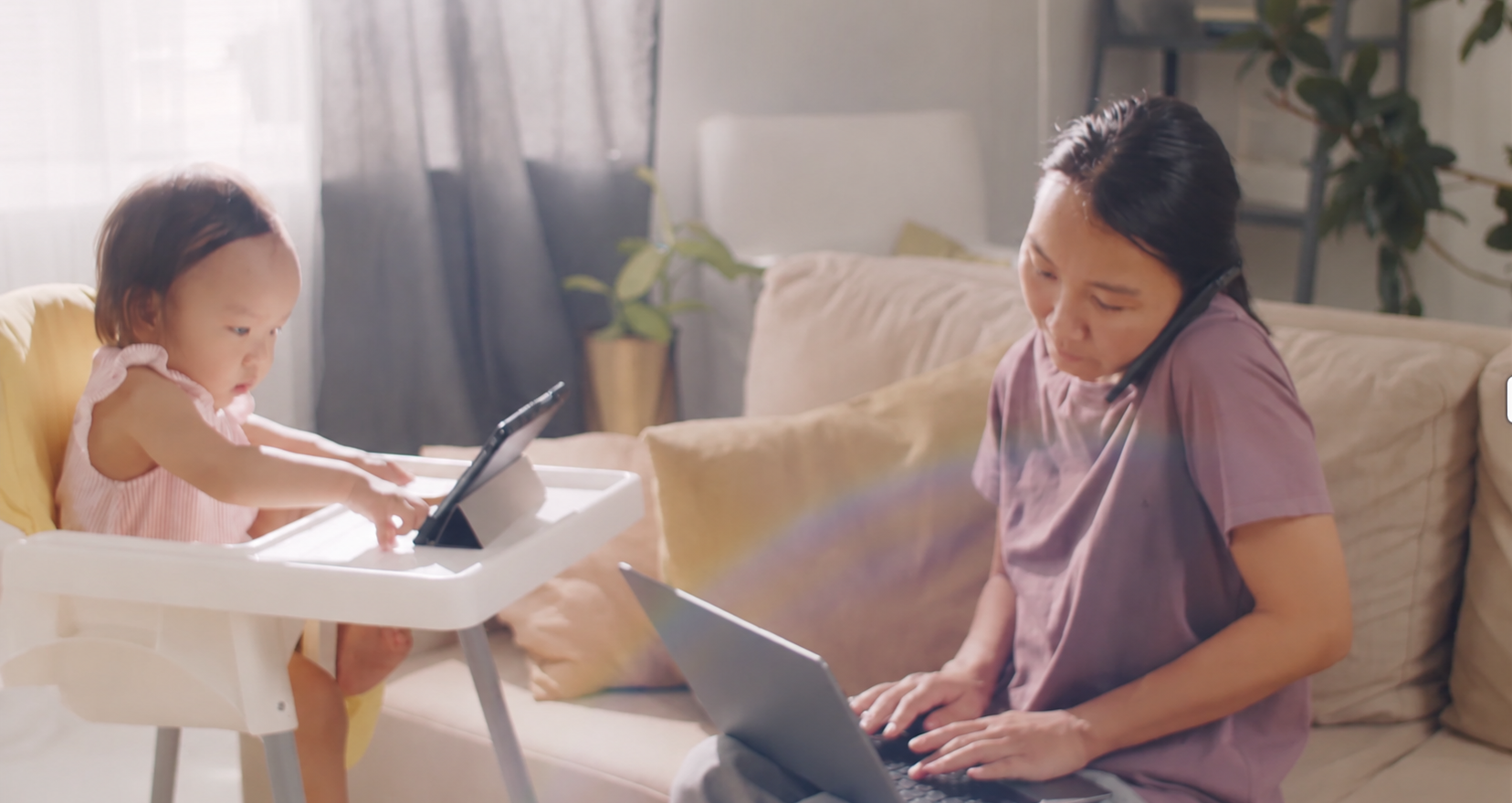
Babies communicate through looks, reaches, and sounds. They rely on adults to notice and respond.
Image: Still from Canva video clip tagged “Adult and Toddler.”
A baby reaches for a ball. An adult notices and says, “A ball! Look at the ball you’re reaching for. The ball rolled away.” The baby hears the word while looking at the object.
AMI 0–3 Trainer Cristel Ruiz sees exchanges like this as a useful way to understand new research from SMU and UCLA. Researchers surveyed 252 caregivers of children ages 8 to 25 months. Caregivers reported that babies were exposed to an average of 4.6 hours of indirect media each day, and that they actively used their phones during about 39% of playtime. Background media was more often heard during meals and seen during play. SMU’s summary and the study in Infancy describe the findings.
The study measured media exposure. The findings place media within the everyday environment where babies are learning language: caregivers reported using phones during nearly four in ten minutes of play, and babies encountered indirect media for an average of 4.6 hours a day. Ruiz points to the interaction that may be interrupted when a baby is trying to share attention.
“Joint attention is one way very young infants and preverbal toddlers express themselves and share their interests with caregivers. When caregivers are distracted, they can miss a child’s attempt to share an interest or engage with them.”
When a child looks at or reaches for something, an adult can follow the child’s attention and name what they see.
“If a child reaches for a ball, we might say, ‘Oh, look at the ball you’re reaching for. The ball rolled away.’ Naming it helps the child connect the sound of the word with the thing itself.”
Ruiz says the phone does not have to be in active use to compete for attention.
“Even when parents aren’t actively using the device, if it’s nearby during playtime, it can still distract from that direct interaction with the baby.”
Background media can compete for attention in two ways. Ruiz notes that noise may make it harder for babies to pick speech out from other sounds. Visual media can also draw their focus during play.
“A visually distracting environment can make it harder for children to focus and learn.”
In Montessori practice, adults prepare the environment and observe how the child uses it. Ruiz includes the adult’s own attention in that preparation. She suggests a small change families can try:
“It doesn’t have to be all day, every day. Creating the conditions for a high-quality interaction between a baby and caregiver can be as simple as leaving your phone on the kitchen counter before you play in the living room.”
A stretch of focused play can give the baby more chances to connect with the adult. Ruiz sees a benefit for the adult, too:
“The world isn’t going to stop while you give a baby 20 or 30 minutes of dedicated attention. Even 30 minutes of engaged time can benefit the baby’s development. It’s good for the baby, and it’s good for our adult brains to have a break from that constant interruption.”
Ruiz is clear that families have different needs and constraints. Phones help people work, arrange childcare, respond to family, and manage demanding days. The study’s authors caution against adding to parents’ stress and note that family routines are shaped by time, resources, housing, childcare, and caregiver well-being. SMU’s summary
“There are many wonderful parents who are dealing with challenges associated with poverty and having fewer resources,” Ruiz says. “It’s important to think about how adults’ technology use around children can reduce the quantity and quality of interactions, while still understanding the realities families are navigating.”
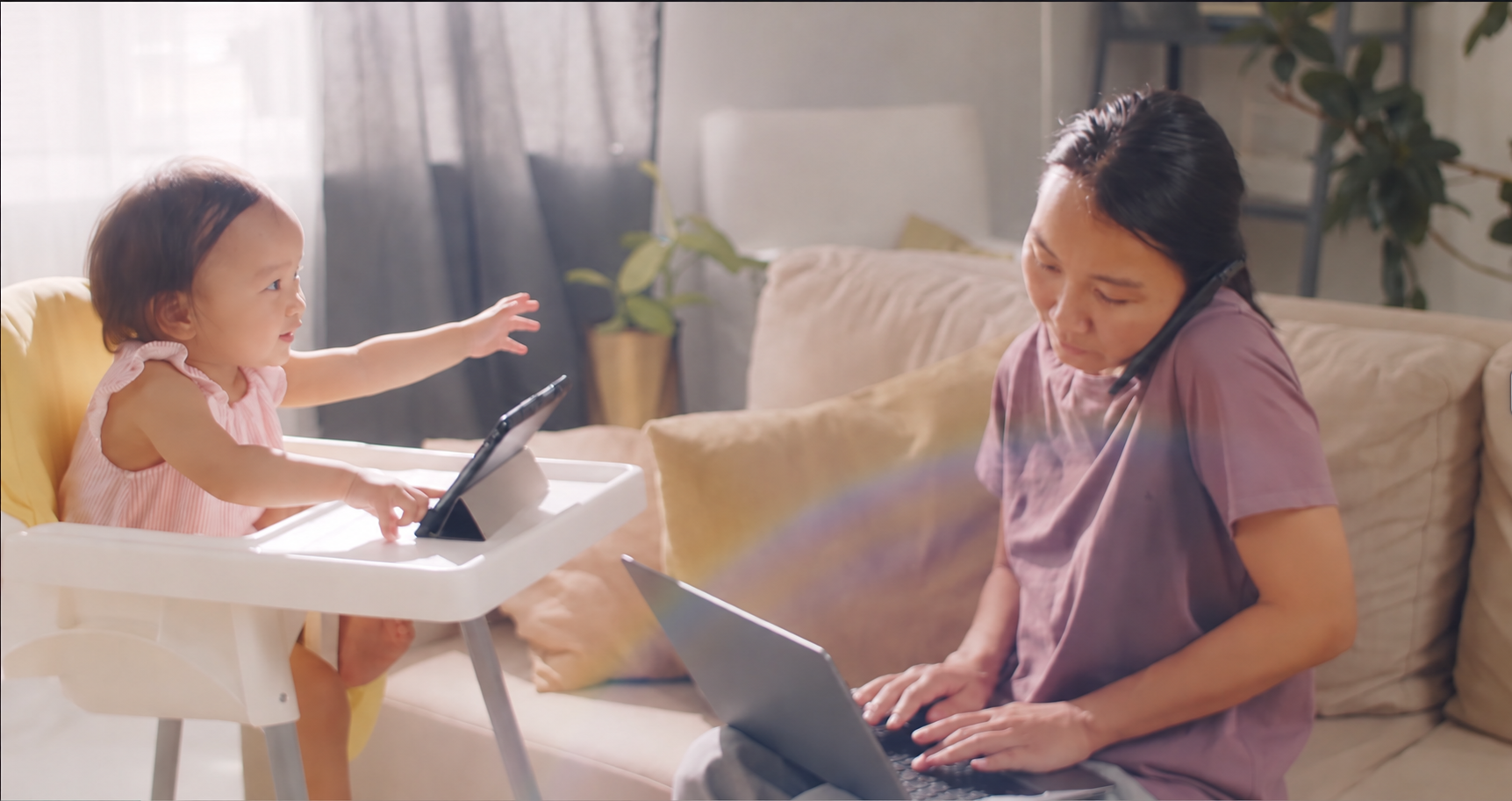
Advocating for the child means keeping the child’s experience in the conversation. Babies rely on adults to notice their bids for connection, and adults deserve support rather than blame as they respond. At MINT, we want to share what research tells us, connect it to what Montessorians see in daily life, and help families find small changes that work for them. A baby points, an adult answers, and a word finds its place. We can make more moments like that possible.
As an AMI 0–3 Trainer at MINT, Ruiz helps adults study young children through observation and consider how everyday interactions support development. MINT’s AMI training allows students to study child development and Montessori practice in depth.
Read the Study
Discover more features selected by MINT’s AMI Montessori trainers and staff, for the Montessori community.
Visit the MINT Reading Room | Discover Montessori Training